Catch More Fish with Less Guesswork: How Trolling Techniques for Boats Turn Your Next Trip into a Success
Trolling Techniques for Boats can feel like a secret language at first—lines out, speeds dialed, divers humming, and a mix of patience and anticipation. But once you get the basics, Du’ll cover water efficiently, find active fish faster, and actually enjoy the process more. This guide from ISSU Wildfish walks Du through practical, real-world steps: from fundamentals for beginners to advanced tweaks that pros use, and seasonal adjustments so Du’re not guessing in cold water or blowing through a school of fish. Read on, try a few experiments on your next outing, and keep notes. Du’ll thank yourself when the rod doubles and the spread sings.
Many anglers find it useful to combine tactics; for instance, pairing trolling runs with moments of drift can locate fish faster. If Du’re curious how drifting and trolling can complement each other, check out our guide on Drift Fishing Strategies for practical tips on when to switch gears. For a broader collection of approaches and step-by-step methods that improve overall results, explore Effective Fishing Techniques. And when Du plan to add live bait into your trolling spread, review our Live Bait Rigging Tips to rig baits that stay natural while trolled.
Trolling Techniques for Boats: Fundamentals for Beginner Anglers
If Du’re new to trolling, the idea of running multiple lines while piloting the boat can be intimidating. Relax. Start small and focus on a few fundamentals. Trolling Techniques for Boats rely on four pillars: movement, presentation, depth control, and spread management. Get these right and most of the variables fall into place.
What trolling actually does for you
Trolling lets Du present multiple baits or lures across a range of depths while systematically covering water. It’s not about luck; it’s coverage plus consistent presentation. Du’re putting lures where the fish are likely to be and keeping them moving with natural action. Want to find the fish faster? Troll.
Starter gear checklist
- Sturdy boat capable of steady slow speeds (trolling motor recommended)
- Two or three trolling rods and matching reels
- Quality line: braid for sensitivity, mono or fluorocarbon for sinking or stealth
- Rod holders that keep rods secure but quick to pull
- Simple depth tools: egg weights, inline divers, and marked lines
- Basic electronics: GPS and a fishfinder with down imaging or CHIRP
First lessons to practice
Before Du chase big fish, practice these skills:
– Run a consistent speed with your GPS and note how different lures perform.
– Practice deploying and retrieving one rod repeatedly to build confidence.
– Learn to set a proper spread—start with one center-back and two side rods.
Choosing Tackle and Lures for Boat Trolling: Insights from ISSU Wildfish
Choosing the right tackle is half art, half science. Trolling Techniques for Boats demand that your rod, reel, line, and lure work together. Mismatches are loud mistakes—lures that don’t swim right, lines that breathe too much, or rods that don’t absorb a strike.
Rods and reels that match the job
For boat trolling, versatility wins. A medium-heavy rod with a moderate-fast tip gives backbone for hooksets and a forgiving tip for lure action. Conventional reels are great for big fish and heavy lines. Spinning reels are handy for lighter presentations or when Du frequently switch between casting and trolling.
Line choices and why they matter
Line choice changes depth, feel, and hookup rates. Braid is popular for its sensitivity and thin diameter; it’s great for fishing where Du want instant feedback. Mono gives Du stretch and some forgiveness—helpful in rocky areas or when fish make sudden runs. Fluorocarbon sinks and is less visible in clear water, so tack it on as a leader when fish are spooky.
Lure selection—pick and stick (until they don’t work)
Here’s a short menu to try and remember:
- Crankbaits: use where mid-depth baitfish are present—good action at set speeds.
- Spoons: flash and wobble—classic for salmon, trout, and aggressive species.
- Soft plastics & swimbaits: natural profiles and scent-friendly options for finicky fish.
- Hoochies and skirted lures: excellent in saltwater or for salmon streams.
- Topwaters: dawn/dusk magic—if Du see splashy activity, make sure one’s in the spread.
Color and size rules
Match the hatch: mimic local baitfish size and color. In murky water or low light, use high-contrast or bright hues. In clear water, go natural. Try two distinct colors at once—if fish follow one and not the other, Du’ve just learned something valuable.
Boat Setup for Trolling: Rod Holders, Reels, and Line Management
A clean, organized boat setup makes trolling less stressful and more productive. When your gear is tidy, Du spend less time untangling and more time fishing. Here’s how to set up for consistent success.
Optimal rod holder placement
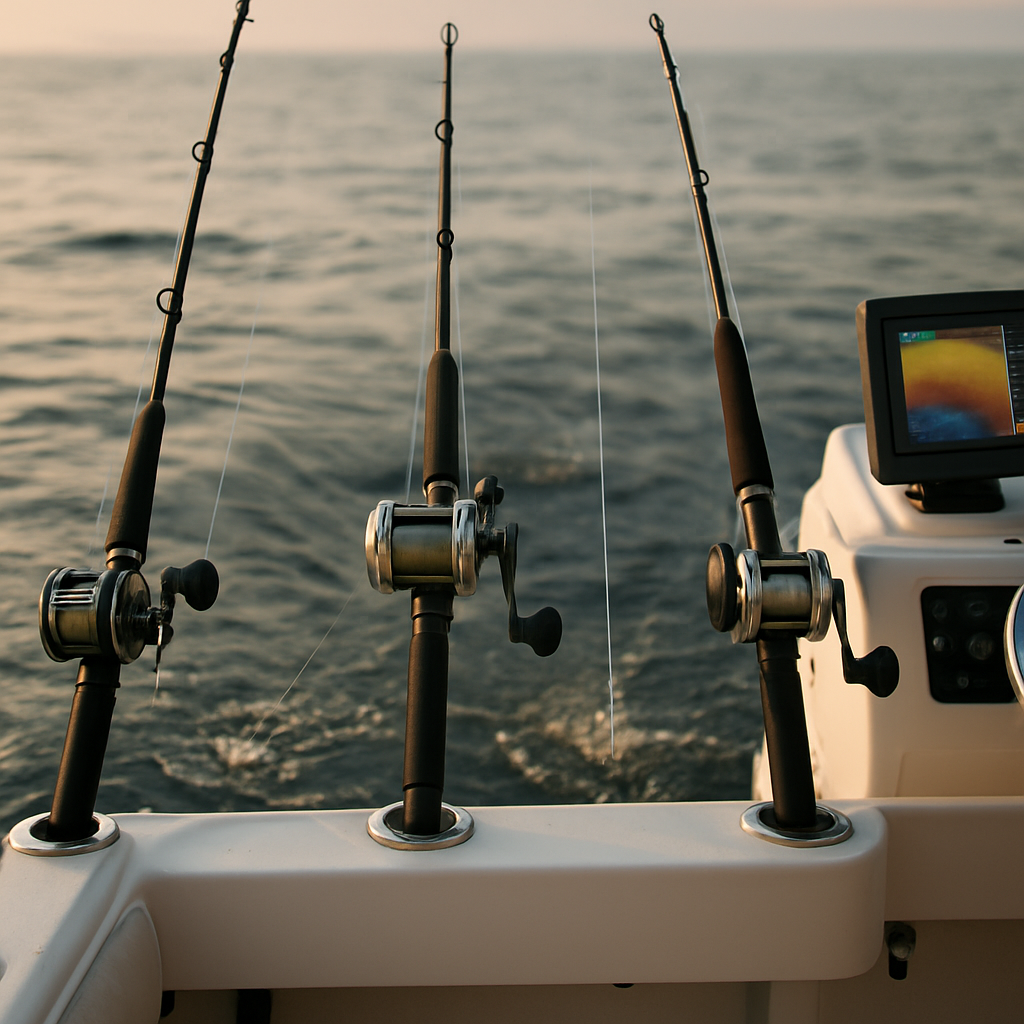
Rod holders aren’t decoration. Put them where Du can reach rods quickly and where lines clear the transom and sides without crossing. Typical setup:
– Transom holders for straight-back trolling.
– Gunwale holders for side spreads.
– Bow holders for long leads and when using lead-core line.
Reel setup, drag, and spooling
Set the drag to allow a firm hookset but avoid breaking lines on heavy runs. Use good backing to fill spool space; that prevents line bunching. Keep spooled line clean and replace it before it becomes brittle—old line snaps at inopportune moments.
Line management tricks that save time
- Use color-marked line or wind markers to know exactly how much line Du’ve let out.
- Stagger leader lengths to reduce tangles—10–15 feet between leaders is a safe rule.
- Planer boards and outriggers expand your spread without crowding the transom.
- Keep split rings, hooks, and leaders organized in labeled containers to make swaps quick.
When to add downriggers, divers, or boards
Downriggers are for precision: when fish are in a narrow band, Du need downriggers. Divers and inline weight systems are lighter, cheaper alternatives that still get you deeper. Planer boards push lines away from the boat—ideal when Du want multiple lures at the same depth without the tangles.
Advanced Trolling Strategies: Speed, Depth, and Lure Presentation
Once Du’re comfortable with the setup, this is where fishing gets strategic. Small adjustments in speed or depth can trigger bites from otherwise uninterested fish. Trolling Techniques for Boats become truly effective when Du master these advanced levers.
Dialing in the right speed
Speed is the single most crucial variable. Every lure has its sweet-spot. Run too fast and the action breaks up; too slow and the lure may roll or not swim. Use a GPS. Experiment in 0.25 mph increments. Make notes. If Du’re switching from a spoon to a plug, expect a speed adjustment.
Finding and holding depth
Use your fishfinder to locate bait and thermoclines. When Du see a bait layer, bring your lure to that level. Longer lines sink deeper. Lead-core and downriggers let Du hold exact depths. If a school is hugging a thermocline, match it—otherwise, your lure is invisible to them.
Finesse in presentation
Presentation is not just action; it’s timing and rhythm. Vary speed briefly to imitate a fleeing baitfish. Switch between flash-heavy and subtle lures to test aggression. Sometimes squeezing a bit of scent onto a soft plastic seals the deal when fish are picky.
Spread tactics pros use
Don’t be afraid to revise your spread mid-trouble. Classic patterns:
– Small spread: one center-back and two sides—great for learning.
– Fan spread: outriggers and boards for wide coverage.
– Staggered depth: mix divers and shallow plugs to test layers.
Seasonal Trolling: Adapting Techniques to Weather and Water Conditions
Season matters. Trolling Techniques for Boats must adapt to water temperature, light levels, and baitfish movement. If Du fish with the seasons, Du’ll be on top of fish behavior—and catch rates will show it.
Spring adjustments
As water warms, fish move shallow to feed. Troll slower and shallower near points, flats, and warming bays. Use smaller-profile lures and be ready to switch to a more aggressive presentation as the day warms.
Summer tactics
Fish often suspend on thermoclines or move deeper in hot months. Downriggers, divers, and lead-core become your friends. Troll early and late for surface action; mid-day, go deep. Keep an eye out for bait schools—if Du find bait, Du’ve found the fish.
Fall strategy
Fall can be electric. Fish gorge before winter. Speed up presentations and try bigger profiles. Troll migratory corridors and drop-offs where bait is pushed along edges. Aggressive plugs and large spoons rule this time of year.
Winter approach
Cold water slows fish metabolism. Slow everything down. Use smaller baits and very slow trolling speeds. Target structure where fish bunker up—current seams, deep holes, and warm-water discharges if Du have them.
ISSU Wildfish Expert Tips: Avoiding Common Trolling Mistakes
Even experienced anglers stumble. Here are practical tips to avoid the common pitfalls that waste time, bait, and patience. Keep this checklist in your head and your gear locker.
Top mistakes and fixes
- Wrong speed: use GPS and stick to a speed chart for each lure.
- Too many lines: start with fewer rods until Du can manage more.
- Ignoring electronics: a quality fishfinder shows where the life is—use it.
- Worn hooks and rings: sharpen and swap hooks; don’t let old gear cost Du fish.
- Not recording results: keep a log of conditions, speed, lure, and depth—your future self will appreciate it.
Safety and common-sense tips
Don’t tempt fate: keep tangle-free zones clear and always be aware of where lines run. Use kill switches when moving about the boat and sunglasses to spot lines and bait. And don’t forget a simple first aid kit—cuts from hooks happen, and it’s no fun if it ruins the day.
Troubleshooting quick guide
No strikes? Change depth first. Then swap color or lure action. If nothing, move.
Fish follow but won’t bite? Slow down a touch and try a subtler lure.
Lines tangling? Shorten the spread, stagger leader lengths, or use a planer board.
Final Checklist and Simple Day Plan
Here’s a no-nonsense day plan Du can follow next time Du’re trolling. It’s short, actionable, and rooted in the Trolling Techniques for Boats covered above.
- Pre-trip: check weather, charge electronics, inspect lines, and rig rods.
- Launch and run to a waypoint made from past success or local knowledge.
- Start slow with a simple three-rod spread and a mid-depth lure.
- Use your fishfinder: identify bait, thermocline, or structure and match depth.
- Adjust speed in small increments and test colors if fish are following but not striking.
- When you get bites, note the speed, depth, and pattern—repeat what works.
- If no action after two cycles, move. Don’t fish dead water—move smart.
FAQ
Q: What is the best speed for trolling lures?
A: Most productive speeds fall between 1.5 and 5.5 mph, but it depends on lure type and target species. Start with the lure manufacturer’s recommended range and experiment in small steps. If Du notice fish following but not committing, try reducing speed by 0.25–0.5 mph to see if Du can entice a strike.
Q: How many rods should Du run when trolling?
A: Two to six rods is typical. Beginners should start with 1–3 rods until Du become comfortable with deployment and retrieval. Use outriggers or planer boards to spread presentations safely once Du’re confident handling multiple lines.
Q: Do Du need downriggers to troll effectively?
A: Not always. Divers, lead-core line, and longer line lengths can reach effective depths for many species. Downriggers give precise depth control when fish are holding on a narrow band—valuable in summer when thermoclines concentrate bait. Choose based on the species and how tight the depth window is.
Q: Which line type is best for trolling large trout or salmon?
A: Many anglers prefer braid for sensitivity combined with a fluorocarbon leader for less visibility and abrasion resistance. Typical combos: 20–40 lb braid with a 10–20 lb fluorocarbon leader. Adjust based on fish size, water clarity, and the need for stretch.
Q: How can Du avoid tangles in a multi-rod spread?
A: Stagger leader lengths by at least 10–15 feet, use outriggers or planer boards to push lines laterally, and maintain consistent speed. Color-marked lines help identify where each rod is set. If wind or chop causes problems, shorten the spread or reduce the number of rods temporarily.
Q: What lure colors work best in different water conditions?
A: In murky water or low light, use high-contrast or bright colors (chartreuse, hot pink, bright orange). In clear water, natural silver, blue, and green patterns that mimic local baitfish are best. If Du’re uncertain, run two contrasting colors in the spread to see which one gets attention.
Q: When should Du change depth vs. changing lures?
A: Change depth first—fish often hold on distinct layers, especially around thermoclines. If changing depth fails to produce strikes, then alter lure action, size, or color. Usually a depth adjustment gives the fastest feedback.
Q: How should Du set drag for trolling and hooksets?
A: Set drag to allow a firm hookset but avoid line break during a run. For braid with a fluorocarbon leader, aim for a drag that lets large fish run without instantly peeling line, but is strong enough to drive the hook. Test drag settings in calm conditions so Du know how your setup performs under pressure.
Q: How do seasonal changes affect trolling tactics?
A: Spring favors shallow presentations near warming points and flats; summer pushes fish to thermoclines—use downriggers or lead-core; fall brings aggressive feeding—speed up and use larger profiles; winter needs subtle, slow presentations near structure. Always match tactics to bait movements and temperature layers.
Q: Is live bait effective for trolling, and how should Du rig it?
A: Live bait can be very effective when trolled at natural speeds. Rigging depends on species—small live herring on a stinger hook for salmon, or a hooked minnow behind a float for near-surface presentations. For detailed methods, see our guide on Live Bait Rigging Tips.
Q: What safety precautions should Du take while trolling?
A: Keep the deck clear of loose gear, use kill switches when moving around, and wear polarized sunglasses to spot lines and bait. Also follow local regulations for number of lines, size limits, and protected areas. A basic first aid kit and VHF radio or mobile phone in a dry bag are essentials.
Q: How quickly should Du move if a spot isn’t producing?
A: Give a new spot 15–30 minutes with adjustments in depth, speed, and lure color. If that doesn’t produce signs of life (bait on the finder, chasing fish, or strikes), move to new water. Don’t waste the day fishing dead water—cover ground smartly until Du find active fish.
Wrap-Up: Make Trolling Techniques for Boats Work for You
Trolling is equal parts setup, observation, and experimentation. Treat every trip as a learning session. Try different speeds, depths, and lure combinations. Keep notes. Adjust with the seasons. Use the tools available—electronics, divers, and planers—and don’t be afraid to simplify if things get messy.
If Du follow the practical tips and strategies in this guide, your confidence will grow and so will your catch rate. Grab your logbook, mark what works, and keep coming back to the same spots to fine-tune your approach. Trolling Techniques for Boats don’t need to be complicated—just intentional.
Ready to get out there? Rig up, set a plan, and enjoy the ride. Tight lines, and may your next troll bring a lively bend to the rod.