Center Console Fishing Boats: An Overview for Serious Anglers
If you want more time fighting fish and less time fighting cramped decks, think about Center Console Fishing Boats. These rigs are the go-to choice for anglers who demand freedom of movement, clear sightlines, and a deck that actually works when the rod bends. Whether you’re stalking redfish in a mangrove-lined creek or running hard for a tuna bite 30 miles out, a well-chosen center console puts the deck, power, and gear where you need them.
This piece will walk you through why center consoles matter, how to pick the right one for your waters, what gear to prioritize, current model highlights for 2026, and how to keep your boat in top shape so it’s ready the moment the weather window opens. Read on — you’ll get practical advice, a few pro tips, and a checklist you can use before your next trip.
Material choice matters more than many anglers assume; whether you lean toward lightweight, impact-resistant aluminum or the smooth finish and insulation of fiberglass will affect handling, maintenance, and comfort. For a deep dive into the trade-offs—durability, repairability, weight, and price—see our detailed comparison in Aluminum vs Fiberglass Fishing Boats, which breaks down real-world scenarios so you can decide what fits your fishing style and local conditions. This knowledge helps avoid buyer’s remorse.
If you’re still exploring what platform fits your needs, our broader resources pull together categories, hull types, and use cases so you can narrow choices quickly. We maintain a comprehensive hub called Best Boats for Fishing that summarizes top picks by environment and budget, from flats skiffs to heavy-duty bluewater center consoles—perfect when you want to compare models without getting bogged down in specs. Bookmark it for your research phase.
And if family comfort and relaxed days on calm water are part of your fishing equation, don’t overlook alternatives that can still be fun and productive, like pontoon platforms for casual angling. Learn how pontoons stack up in stability, space, and comfort in our guide Pontoon Boats for Fishing, which covers when a pontoon makes sense and how it compares to center consoles in cost, versatility and fishability—especially useful if you fish with kids or a crowd.
Why Center Console Boats Are Ideal for Inshore and Offshore Fishing
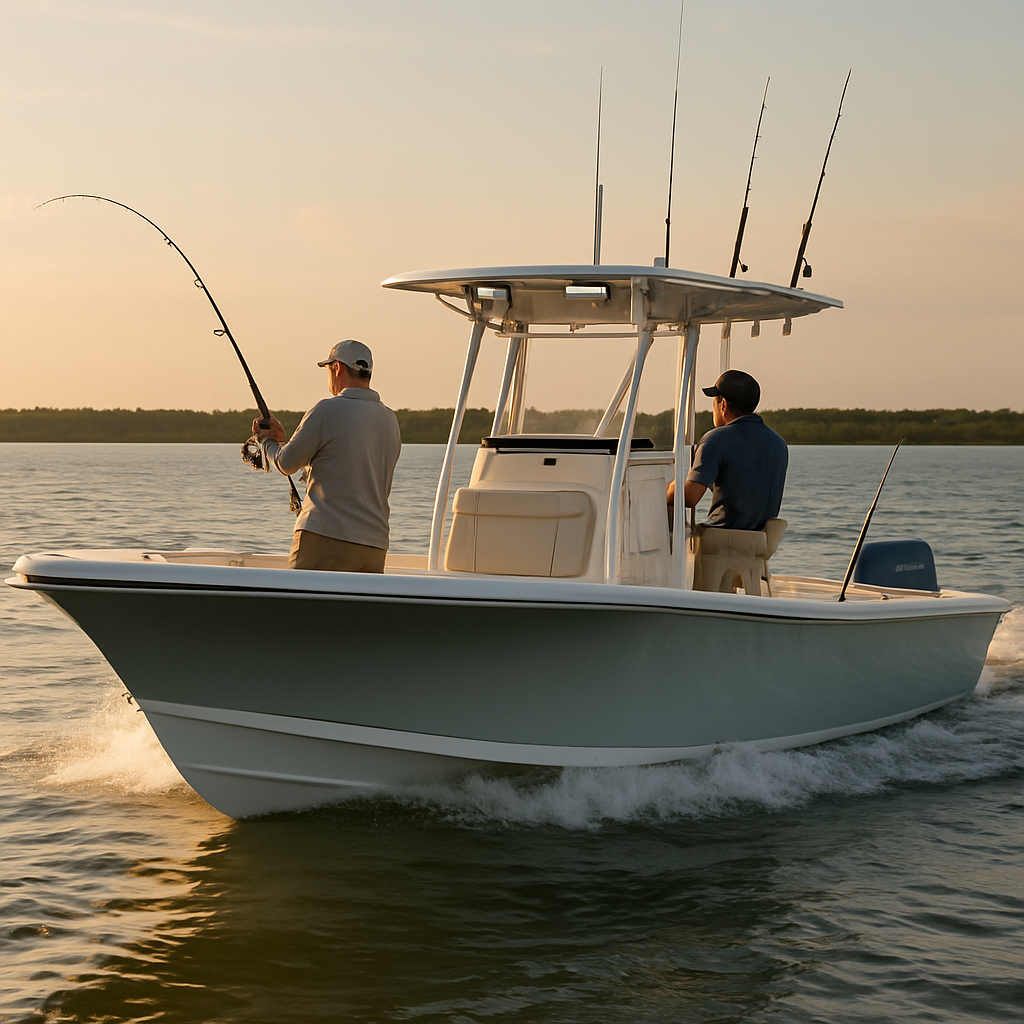
What makes Center Console Fishing Boats so versatile? It’s all about function-first design. Place the helm in the middle and you open up an uninterrupted, 360-degree fishing platform. That’s huge, whether you’re sight-casting for bonefish or circling a structure for snapper. Here are the core reasons anglers keep coming back to center consoles:
- Unobstructed Deck Space: You can walk around the entire boat without ducking behind seats or squeezing past a cabin. Cast from the bow, fight from the stern, and still access tackle without tangling lines.
- Adaptable Layouts: From modular seating to removable coolers and bait stations, these boats are built to be reconfigured for the trip at hand.
- Electronics & T-Top Integration: T-tops and hardtops give you mounting points for radar, multiple MFDs, outriggers, rod racks, and great overhead shade—small things that make long days better.
- Scalable Power: From economical single outboards for inshore runs to triple or quad setups for speed and redundancy offshore, you can match power to purpose.
- Good Resale Value: Center consoles are in high demand. Keep yours well-maintained, and you’ll find a steady market if you decide to upgrade.
But let’s be honest: not every center console is a one-boat-fits-all. A 21-foot shallow-draft model built for flats won’t feel the same as a 33-foot bluewater bruiser when the Gulf gets angry. Pick the platform that matches your primary use and budget.
Top Center Console Models for 2026: A Guide from ISSU Wildfish
Each season brings tweaks in hull design, onboard systems, and power packages. For 2026, a few models stand out for combining seaworthiness, angler-friendly features, and build quality. Below is a compact comparison to help shortlist options. Use this as a starting place—then go test-ride at full load.
| Model | Length | Best For | Standout Features |
|---|---|---|---|
| Mako 334 CC | 33’4″ | Offshore & tournament | Deep-V hull, large livewell, triple outboards |
| Boston Whaler 320 Outrage | 32′ | Family & offshore | Unsinkable hull, premium fit, advanced electronics |
| Sailfish 276 DC | 27’6″ | Inshore to nearshore versatility | Comfortable layout, efficient hull, great storage |
| Grady-White Freedom 275 | 27’6″ | Coastal, family-friendly | Dry ride, solid construction, good ergonomics |
| Robalo R317 | 31’6″ | Bluewater capability | High freeboard, big fuel, tournament-ready |
Test rides matter more than spec sheets. Try to run the boat in conditions similar to where you fish. Bring fuel, gear, and at least one passenger—load changes feel shockingly different when the boat isn’t empty.
Essential Center Console Fishing Equipment for Maximum Efficiency
Getting the right gear in the right place can turn a good day into a great one. You don’t need to overdo it—focus on systems that impact catch rates, safety, and time on the water.
- Navigation & Electronics
- Multifunction Display (MFD) with CHIRP, down-imaging, and side-scan—helps you find structure and bait quickly.
- VHF radio with DSC and an AIS receiver for busy shipping lanes.
- Autopilot and engine integration—golden when trolling or running long distances.
- Radar for offshore runs and low-visibility safety.
- Fishing Systems
- Aerated livewell(s) with good flow and baffling to keep bait lively.
- Insulated fish boxes with proper drains and macerators.
- Rod holders—gunnel-mounted, T-top storage, and a rocket launcher if you troll.
- Tackle storage designed to keep lures organized and rewindable.
- Propulsion & Power
- Properly sized outboard(s) with modern fuel injection for efficiency and reliability.
- Trolling motor with GPS anchoring; priceless for sight fishing or when you need to hold a spot quietly.
- Battery bank sized for electronics, pumps, and motor—consider a smart charger and alternator upgrades.
- Safety & Comfort
- EPIRB or PLB, throwable flotation, enough PFDs for everyone.
- High-capacity bilge pumps, bilge alarms, and an accessible fire extinguisher.
- T-top with LED spreader lights and rod storage—adds comfort and utility when nights get long.
- Specialty Items
- Dehookers, lip grippers, gloves, and a quality net—fish-handling gear protects both you and the catch.
- Underwater lights for night fishing; they attract bait and create a feeding area.
- Live bait management: bait pump or aerator for long trips where fresh bait matters.
Pro tip: Think about power budgeting. High-end MFDs, radar, and sounders draw energy. Plan alternator capacity and battery bank size so you don’t get stranded with dead toys mid-run.
Choosing the Right Center Console Boat for Your Water Conditions
Pick the wrong hull and you’ll spend a lot of time wishing you’d chosen differently. The trick is matching hull form, freeboard, and features to the sea state you most often face.
Inshore / Shallow Water (Flats, Bays, Estuaries)
If you live for sight fishing on skinny water, shallow draft and light weight matter. You want a hull that lets you nudge into shallows without spinning props or kicking up mud.
- Choose lower deadrise and reduced draft for flats access.
- Consider jack plates or shallow-water props for propulsion control.
- Keep freeboard low for easy casting and boarding from docks.
Nearshore / Coastal Waters
For day runs along reefs and structure in coastal environments, look for a balanced approach—comfort for moderate chop and enough fuel for longer trips.
- Length: 21–30 feet often hits the sweet spot.
- Comfort: Leaning posts, windshields, and T-top protection make rougher patches tolerable.
- Range: Make sure fuel capacity covers round trips with a safety reserve.
Offshore / Bluewater
When you’re heading offshore regularly, prioritize a hull that protects you in a seaway, plenty of fuel, and redundancy in critical systems. Offshore fishing is rewarding but unforgiving—prep accordingly.
- Deep-V hulls with higher deadrise provide a softer ride in chop.
- Higher freeboard and pronounced bow flare reduce spray and add safety.
- Redundancy: dual pickups, extra bilge pumps, and secondary systems reduce risk.
Other selection tips: never ignore payload. A vessel’s handling changes when it’s loaded with fuel, people, ice, and tackle. Dealers often demo boats light; insist on a test with realistic load.
Maintenance and Care Tips for Center Console Fishing Boats
Routine maintenance is the slow, quiet secret behind reliable days on the water. Do the basics consistently and you’ll avoid emergency repairs when you can least afford them.
Daily & Pre-Trip Checks
- Check fuel and oil—look for cloudy fuel or water in separators.
- Visual engine inspection for leaks, loose clamps, and corrosion.
- Test bilge pumps and alarms; make sure they switch on automatically.
- Confirm safety gear is onboard and accessible: PFDs, flares, fire extinguisher.
- Power up electronics and verify transducer and antenna connections.
Weekly / Monthly Tasks
- Flush outboards after saltwater use; fog the engine with corrosion inhibitor.
- Inspect sacrificial anodes; replace when half gone.
- Lubricate steering linkages, control cables, and check hose clamps.
- Clean and secure tackle and gear; salt buildup destroys zippers and seals faster than anything.
Seasonal & Annual Work
- Follow manufacturer intervals for oil and lower unit changes.
- Replace water pump impellers annually or when you see performance drop.
- Inspect hull for stress damage and repair gelcoat or cracks immediately.
- Service batteries and test alternator output; replace old batteries before a trip if needed.
Winterization & Off-Season Storage
- Stabilize fuel, fog engines, and run antifreeze through freshwater systems if you’ll freeze.
- Remove batteries and keep them on maintenance chargers in a dry place.
- Cover the boat with a breathable cover and use support poles—no water pockets allowed.
Keep a maintenance log. Track hours, part changes, and service dates. It’s more than neatness—this record smooths out warranty claims and boosts resale value.
Pre-Departure Checklist for Every Trip
- Check the weather and tides; file a float plan with someone ashore.
- Confirm fuel, oil, and battery levels; calculate conservative range with reserve fuel.
- Power up and test electronics—GPS, MFDs, VHF, autopilot.
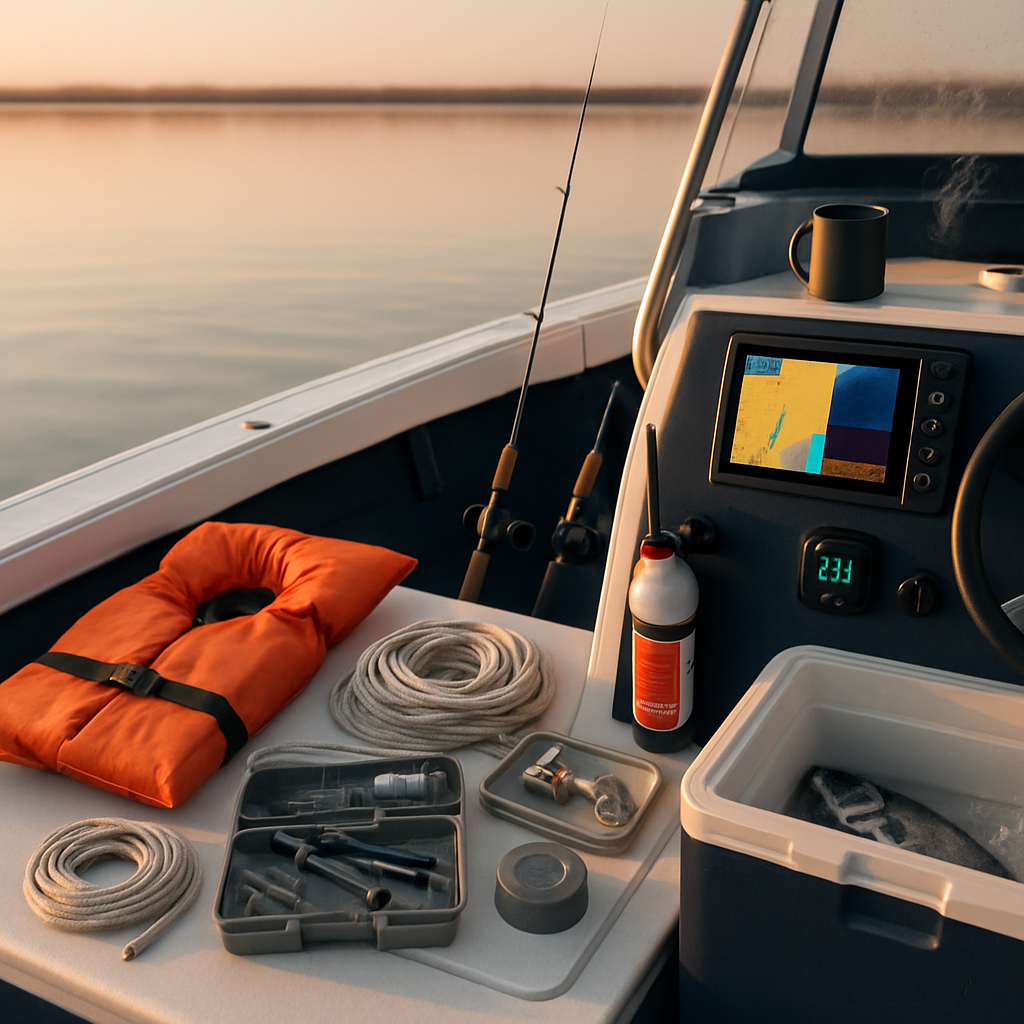
- Make sure safety gear is in-date and accessible: PFDs, EPIRB/PLB, fire extinguisher.
- Distribute gear and ice for even weight; secure loose items to prevent tripping and gear loss.
Simple items like a spare bilge pump fuse, extra fuel filter, or a compact tool kit can save a trip. Keep a small emergency kit with duct tape, hose clamps, and common spares for the engines you run.
Frequently Asked Questions (FAQ)
What size Center Console Fishing Boats should you get for your needs?
If you fish mostly inshore and run with one or two friends, a 20–24 foot center console is often ideal—easy to trailer and economical. If you plan regular nearshore trips and want more comfort and range, aim for 24–30 feet. For consistent offshore work or tournament-level fishing, 30+ feet gives better seakeeping, fuel capacity, and equipment room. Always test-ride loaded with fuel, people, and gear, because handling changes when the boat isn’t empty.
Are center consoles family-friendly or just for hardcore anglers?
Center consoles can be very family-friendly if you pick the right model. Look for models with comfortable seating, shade from a T-top or hardtop, enclosed head options, and roomy storage. Many modern center consoles balance fishing features with amenities—coolers, forward lounge seating, and safe handholds—so you can fish hard in the morning and cruise with family in the afternoon.
Aluminum vs fiberglass—does it matter for a center console?
Yes, material affects weight, ride, repairability, and cost. Aluminum boats tend to be lighter and are often used in shallow-draft models; they stand up well to impact and are easier to repair for dents. Fiberglass offers a smoother ride, better vibration insulation, and more complex shapes for cabins and storage. Your local waters and budget will guide the choice—if you frequently run rocky or shallow areas, aluminum might be preferable; if offshore comfort and a quieter ride are priorities, fiberglass could be the better fit.
How much should you budget for electronics on a center console?
Electronics budgets vary widely. A basic safe setup—MFD with chartplotter and basic sonar, VHF radio, and GPS—can start around a few thousand dollars. A more serious rig with dual large MFDs, CHIRP/side-scan sonar, radar, autopilot, AIS, and high-end transducers can push into the tens of thousands. Factor in installation costs, wiring, and battery/alternator upgrades. Prioritize the features you’ll use most and expand later if needed.
Is a center console suitable for overnight trips?
Some center consoles have cuddy or cabin options that allow for overnighting; these are generally found on larger models. If you want to overnight regularly, choose a boat with an enclosed head, berth, and sufficient storage for provisions. Smaller center consoles can support a quick overnight if you bring a portable marine head and sleeping gear, but for comfort and safety, dedicated overnight models are better.
What maintenance tasks are most important to prevent costly repairs?
Consistent basics keep costs down: flush outboards after saltwater runs, fog and lubricate engines, check and replace sacrificial anodes, service lower units and change engine oil on schedule, inspect hoses and clamps, and keep electronics and battery systems in good order. Corrosion control in saltwater is crucial—stay proactive with anodes and protective sprays. Keep a simple log of tasks and engine hours to avoid surprises.
How do center consoles perform in rough seas versus flats?
Hull design matters. Flatter deadrise and lighter hulls excel in shallow water and provide initial stability for standing and casting, but they can pound in bigger seas. Deep-V hulls with higher deadrise offer a much smoother ride in chop and swell offshore but have deeper drafts that limit access to skinny water. Match the hull to where you fish most often, or accept the trade-offs if you want a true do-it-all boat.
What safety gear should every center console owner carry?
At minimum: enough life jackets (PFDs) for everyone onboard, a throwable device, VHF radio, EPIRB or PLB for offshore trips, flares, a fire extinguisher, and a basic first-aid kit. For offshore runs also carry redundancy—extra fuel filters, a spare bilge pump fuse, tools, and a backup power plan (second battery bank). Train your crew on where gear is stored and how to use it; practicing emergency drills boosts confidence and safety.
How much does a center console typically cost to buy and operate?
New center consoles vary widely—small inshore models might start under $40k, mid-range family/nearshore boats often fall in the $80k–$200k range, and larger offshore models can exceed $300k or more with power and options. Operating costs include fuel, insurance, slip or storage fees, maintenance, winterization, and electronics updates. Fuel and engine hours are the biggest variable—plan realistically for trips and include a buffer for unexpected maintenance.
Are center consoles a good long-term investment?
Center consoles hold value well because of broad demand and versatility. Maintaining service records, protecting the boat from corrosion, and keeping electronics up-to-date all help preserve resale value. Choose a platform that matches your needs—boats that are misused or chronically overloaded tend to depreciate faster. With sensible care, a center console can be a long-term asset for both pleasure and sport fishing.
Conclusion — Match Boat, Gear, and Knowledge
Whether you’re stepping up from a skiff or replacing an older ride, Center Console Fishing Boats give you flexibility, fishability, and long-term value. The smartest purchases aren’t about getting the flashiest electronics or the biggest engines—they’re about matching hull design, systems, and layout to how and where you fish.
So, what should you do next? Make a short list of the waters you fish most, how many people you typically carry, and what gear you can’t live without. Test-ride boats with those factors in mind. Talk to local captains. And, spend a little time making a realistic power and maintenance plan. Do that, and you’ll be on the water more, worrying less, and catching better fish.