Catch More Fish with the Right Platform: How Pontoon Boats for Fishing Can Change Your Game
Attention: You love being on the water, but frustrated that your “party pontoon” just isn’t cutting it when the fish are biting. Interest: Imagine a stable, roomy platform where every angler has a clear casting lane, a dedicated rod locker, and a whisper-quiet trolling motor to sneak up on hotspots. Desire: That’s what the right pontoon does—turning comfort into productivity. Action: Read on and you’ll get practical, down-to-earth guidance on choosing, outfitting, and fishing from pontoon boats so your next trip is productive and stress-free.
Choosing the Best Pontoon Boat for Fishing: A Guide by ISSU Wildfish
Choosing a pontoon boat for fishing starts with asking a few honest questions about how you fish. Do you like sight-fishing flats for redfish? Are you running big reservoirs chasing stripers? Or are lazy summer mornings with the kids more your speed? Your answers shape the boat you need.
When you’re sizing up platforms, it helps to compare pontoons with other popular fishing hulls so you know what you might be giving up or gaining. If you want a broader perspective beyond pontoons, check out our comprehensive overview of the Best Boats for Fishing, which walks through strengths and weaknesses of different boat types, so you can weigh stability, speed, deck space, and electronics options before committing to a build or purchase.
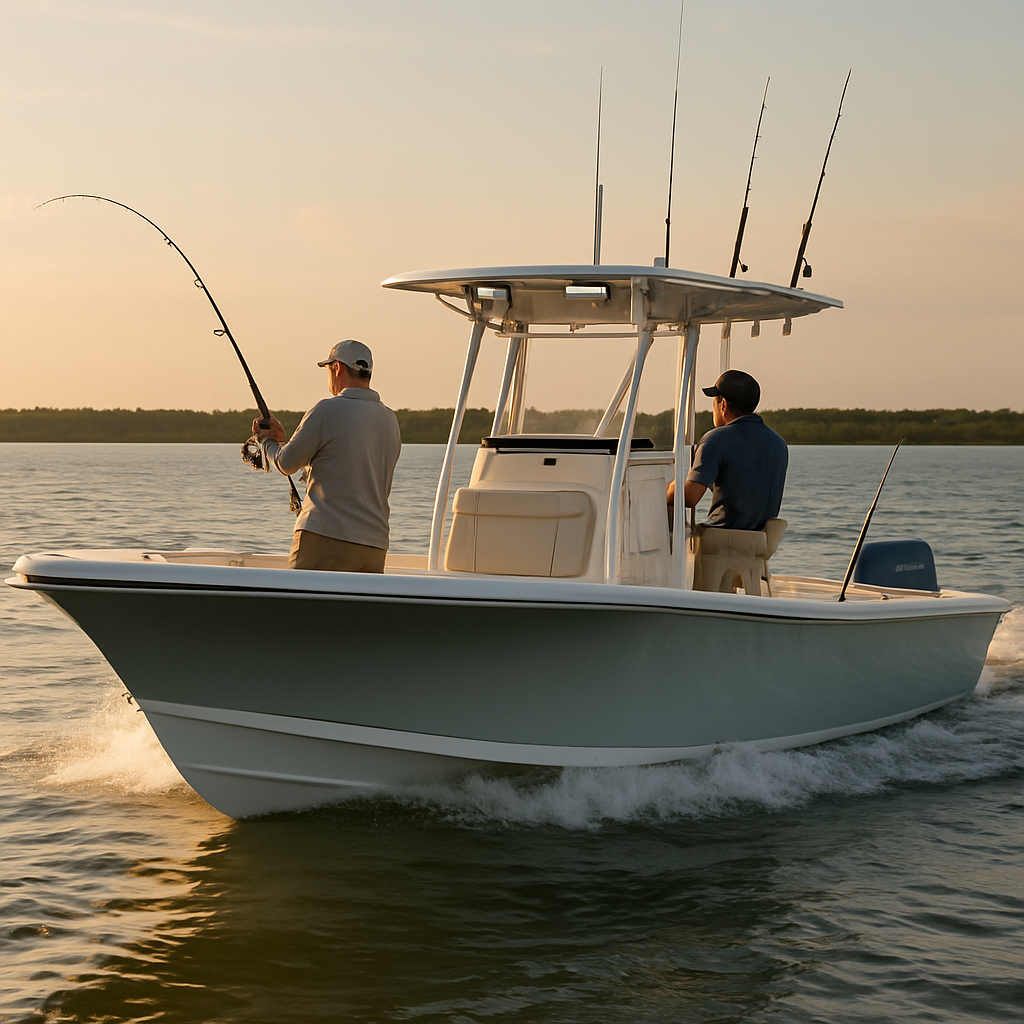
Sometimes anglers wonder whether a center console might suit their style better—especially if you spend time on open water or need an uncluttered deck for casting all around the boat. Our guide on Center Console Fishing Boats outlines when a center console trumps a pontoon, and when a pontoon actually out-fishes a center console for family outings or slow-boat sight fishing in protected waters.
Location plays a big role in the right choice; inshore flats, protected bays, and open offshore grounds all call for different setups. To help narrow things down, read our primer on Offshore vs Inshore Fishing Boats which explains why draft, hull strength, and corrosion protection matter—and how those factors influence whether you should outfit a pontoon for inshore work or stick with a different hull for offshore runs.
- Primary fishing style: sight fishing, trolling, casting, or multi-species lake trips?
- Typical waters: shallow rivers, flats, large lakes, protected bays, or open coastal stretches?
- Capacity: how many anglers, how much gear, and how often you’ll have guests?
- Deck layout: do you need raised bow and stern platforms, removable seating, or an open-cast deck?
- Pontoon type: dual logs for simplicity, or tritoon for added lift and stability?
- Power: outboard size, compatibility with a strong trolling motor, and fuel capacity?
- Fishing systems: livewells, rod storage, fish boxes, and electronics mounts?
- Budget & lifecycle: buy new or used, maintenance tolerance, and resale value?
If you’re torn between models, prioritize fishability over bling. A simple deck that lets you move, cast, and see the water will almost always out-fish a feature-packed party pontoon that leaves you stepping over coolers.
Key Pontoon Boat Features for Serious Fishing on ISSU Wildfish
Not all pontoons are created equal for the angler. When you’re looking at options, these features are the ones that separate a true fishing platform from a weekend cruiser with rod holders stuck on.
Raised Casting Platforms
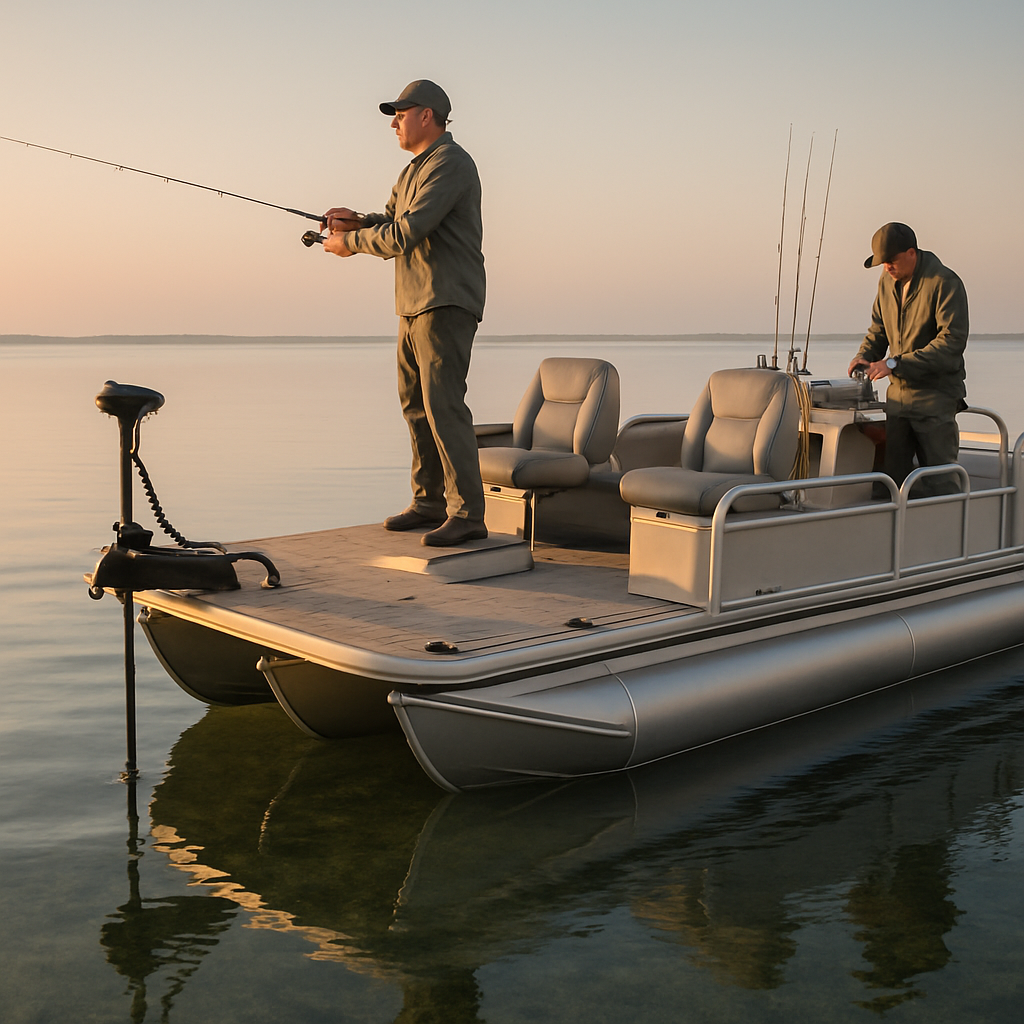
Raised platforms at the bow and stern are a game-changer. They give you a clearer sightline, better casting angles, and a place to stand without worrying about tripping over seats. For sight fishing, a higher vantage point helps you spot tailing fish and shallow structure.
Livewells and Fishcare
Integrated livewells with strong circulation and aeration matter. If your pontoon will be used for keepers or tournament runs, look for insulated fish boxes and easily serviceable pumps. Two livewells (or a livewell plus a chilled fish box) handle multiple bait types and keep your catch in top shape.
Rod Storage and Organization
Rod lockers that hold rods vertically with tip protection are essential. You don’t want rods leaning across the deck. Good storage reduces broken tips and makes rig changes faster. Also look for accessible tackle stations—slide-out trays near the casting platform are worth their weight in gold.
Trolling Motor Integration
Make sure there’s a solid, reinforced mount point at the bow or transom for a high-thrust trolling motor. Battery space and wiring channels should be designed for marine use—no jury-rigged leads. A purpose-built battery compartment keeps weight low and wiring tidy.
Electronics and Power
Pre-wiring for fishfinder/GPS units and a clean dash layout reduce headaches later. Look for alternate mounting points so you can place screens in the best sightlines without blocking casting lanes. Extra fused circuits are a nice-to-have for livewell pumps, aerators, or downriggers.
Durable Decking
Choose closed-cell foam decking or quality EVA decking over cheap carpet. Foam resists rot, is easier to clean after a messy day of fish guts, and gives better traction when surfaces are wet.
Efficient Tackle and Storage Setups on Pontoon Boats
How you store and access tackle on a pontoon can be the difference between a hooked fish and a lost opportunity. Here’s how to make your setup fast, organized, and durable.
Vertical Rod Racks
Vertical racks keep rods safe and out of the way. Install racks in lockers or along backrests. For longer rods, make sure the rack protects tips and reels; keep the heaviest rods low for balance.
Tackle Stations and Bait Prep Areas
A small, dedicated tackle station with slide-out boxes for your go-to lures speeds lure changes. Consider a removable prep board or a small cutting station that snaps into place on the stern for cleaning bait or prepping flies.
Under-Seat Modular Storage
Removable plastic bins under seats are brilliant—label them “Lines & Leaders,” “Terminal Tackle,” “Spares,” and so on. When the lake gets windy, you won’t be digging through bags; everything has its place and stays dry.
Livewell and Cooler Strategy
Think about whether you want a dedicated livewell, an insulated fish box, or both. Livewells are necessary for bait and short-term holding; insulated fish boxes with ice keep table fare fresher if you plan to bring fish home.
Battery and Wire Management
Secure batteries in ventilated, strapped boxes. Use fused distribution blocks and color-coded wiring. A neat electrical setup reduces corrosion issues and makes troubleshooting straightforward when you’re out on the water.
Pontoon Boat Setup Essentials for Successful Fishing Trips
Before every trip, run through a quick routine. You don’t need to be obsessive, but a consistent pre-trip setup saves time and prevents dumb losses.
Safety First
Life jackets for every passenger, a throwable device, a fire extinguisher, and an accessible first-aid kit are non-negotiable. Even calm lakes can produce surprises—be ready.
Navigation and Communication
Check your GPS and fishfinder, and make sure VHF or phone is charged. If you’re in unfamiliar waters, print a simple map or save offline charts. Tell someone where you’re heading and your expected return time.
Anchors and Station-Keeping
Match your anchor to the bottom type—rope for muddy bottoms, flukes for sand. Have a secondary anchor for tricky winds. Pontoons can drift fast with wind; a reliable anchor saves coolers and tempers.
Power and Fuel Management
Charge trolling motor batteries overnight and keep a backup if you fish all day. Check outboard fuel levels and the condition of fuel lines. If you’re relying on the alternator to charge batteries, know the limits and plan accordingly.
Tool Kit and Spares
A small kit with basic tools, spare prop, fuses, and a duct-tape wrap won’t fix everything, but it’ll get you home in most cases. For pontoon-specific fixes, carry a patch kit and a small inflator if your logs are the inflatable alloy type.
Best Practices for Pontoon Fishing: Casting, Trolling and Safety
Pontoons offer a unique blend of stability and room—use it. But don’t forget they behave differently than V-hull boats. Adjusting your techniques will help you land more fish and keep everyone safe.
Casting from a Pontoon
Stand on raised platforms when possible. Remove obstructing seats to open the deck. Move slowly and deliberately—rapid movements can spook fish in shallow water. For distance, braid with a fluorocarbon leader; it’s a reliable combo for casting from a higher platform where wind can play tricks.
Trolling from a Pontoon
Bow-mounted trolling motors give you control and quiet. Use GPS speed hold where available—fish are often keyed to very narrow speed ranges. Stagger lines to prevent tangles and vary depths with weights, downriggers, or diving plugs based on the species you’re targeting.
Safety Tips While Fishing
- Wear PFDs when moving about the boat or in rough weather.
- Balance weight by moving heavy gear near the centerline and keeping anglers spread evenly.
- Keep a clear path for casting lanes and for quick movement during a hookup.
- Stop the engine before handling lines near the propeller or when someone is swimming or boarding.
Comparing Pontoon Models: Stability, Speed, and Fishability
When you’re comparing pontoons, break the decision into three pillars: stability, speed (and handling), and fishability. Each pontoon model will trade some of one for gains in another, and your job is to prioritize.
Stability
Stability depends on tube diameter, spacing, and the number of logs. Tritoons nearly always offer better initial stability and can support heavier power without becoming uncomfortable. For sight fishing and multiple anglers standing on the gunwales, a tritoon or a wide dual-tube with well-spaced logs will feel rock-solid.
Speed and Handling
Some pontoons are built to plane—those get you to distant spots faster and can handle chop. If you need speed, look for lighter decks and performance-oriented hull shapes with higher horsepower ratings. But remember: speed often comes with more noise and wake, which can spook fish in quieter waters.
Fishability
Fishability is the mix of layout and installed systems. The best fishing pontoons have large casting platforms, easy-to-access electronics, plenty of dry storage, and livewells that work. Think through how many anglers will fish at once and how lines might cross. A layout that lets three anglers fish without stepping on each other is gold.
Common Trade-Offs and Recommendations
- Comfort vs. casting space: If you often host non-fishing guests, you might need compromise seating. For pure fishing, sacrifice a few lounges for open deck space.
- Power vs. stealth: Bigger engines give range and speed, but a quiet trolling motor and moderate main engine often produce better fishing results near fishable structure.
- Complex systems vs. simplicity: Integrated electronics and multiple livewells are convenient, but they need upkeep. A simple, well-executed setup can be more reliable and easier to customize over time.
Use-case picks:
- Shallow flats & sight fishing — low-draft pontoons with bow platforms and quiet high-thrust trolling motors.
- Family + fishing days — flexible seating that converts to open cast space, plus a solid livewell and a reliable outboard.
- Tournament or long-range runs — tritoons with high-horsepower outboards, robust electronics, and performance hull shapes.
- Saltwater inshore — corrosion-resistant fittings, sacrificial anodes, and sealed compartments with good drainage.
Final Steps: How to Buy, Customize, and Fish Your Pontoon
So you’ve read the features, checked the lists, and you’re itching to make a choice. Here’s a short, practical roadmap to make sure you don’t buy the wrong platform.
- Identify your primary fishing style and water type—write it down.
- Make a must-have vs nice-to-have list of features (livewell, rod lockers, tritoon, etc.).
- Test-drive two or three pontoons with your gear if possible—load them up and stand on the casting platforms.
- Ask about warranty, corrosion protection, and dealer support for electronics installations.
- Plan upgrades you can add later—trolling motor, upgraded electronics, custom racks—so you don’t overpay at purchase.
Quick Pre-Trip Checklist You Can Use
- Life jackets and safety gear
- Charged trolling and start batteries
- Working livewell and bait
- Anchor and spare rode
- Basic tools, spare prop, and fuses
- Weather check and float plan
Frequently Asked Questions — Pontoon Boats for Fishing
Are pontoon boats good for serious fishing?
Yes—pontoon boats for fishing have evolved into true fishing platforms. If you outfit them properly with a high-thrust trolling motor, reliable electronics, livewells, and smart deck layouts, they perform extremely well for inshore, lake, and many coastal applications. For offshore bluewater or heavy chop you’ll want to consider hulls designed specifically for open-ocean conditions, but for most anglers fishing lakes, rivers, and protected bays, a fishing-focused pontoon is a fantastic option.
What pontoon configuration is best: dual-tube or tritoon?
Tritoons generally offer more lift, better initial stability, and improved performance with higher horsepower, making them a great choice if you need speed or fish with multiple anglers standing. Dual-tube pontoons are simpler, lighter, and often less expensive; they work well for smaller lakes and casual fishing. Pick a tritoon if you plan to run farther, carry heavy loads, or want a smoother ride in chop; pick a dual-tube for smaller budgets and calmer waters.
How much horsepower do I need for a fishing pontoon?
It depends on the boat size and use. For a 20–24 ft pontoon used on lakes, 90–150 HP is common and provides good cruise and responsiveness. If you run long distances, have a heavy load, or want planing performance on a tritoon, 150–250 HP may be appropriate. Always follow the manufacturer’s max HP rating and remember that more horsepower increases fuel consumption and noise—balance power needs with fishing stealth.
Can you fish offshore from a pontoon?
Most standard pontoons are best kept inshore or on protected waters. However, some performance pontoon designs with deep logs, reinforced decks, and appropriate power can handle nearshore conditions in calm seas. If you plan offshore trips, prioritize corrosion-resistant components, sacrificial anodes, and a hull rated for chop. When in doubt, stick to bays and protected nearshore areas for safety.
How should I set up a trolling motor on a pontoon?
Mount a high-thrust, bow-mounted trolling motor for best control and station-keeping. Make sure you have dedicated, properly wired batteries—ideally cranking plus one or two deep-cycle batteries for trolling. Use a power distribution block, marine-grade wiring, and secure battery boxes. Consider GPS anchor/spot-lock features if you want hands-free station holding over structure.
What maintenance does a fishing pontoon need?
Regular maintenance includes flushing the outboard, inspecting and greasing steering/drives, checking pontoons for dents or leaks, cleaning drains and scuppers, and preserving deck materials. For saltwater use, rinse and flush systems thoroughly after each trip, inspect sacrificial anodes, and use corrosion-inhibiting sprays on exposed metal and electronics. Keep livewells and pumps clean to avoid odors and biofouling.
How much storage and what livewell setup do I need?
Match storage to the number of anglers and trip length. At minimum, have rod lockers, under-seat bins, and a small tackle station. For livewells, one medium livewell (20–30 gallons) handles bait for casual trips; tournament-style anglers often want two livewells or a livewell plus a chilled fish box. Insulated fish boxes are handy if you plan to keep fish for the table.
Are pontoons safe in windy conditions?
Pontoons are generally stable but can be affected by wind and short chop due to their wide, flat profiles. In strong winds, expect more drift and less comfort than a deep-V hull. Always monitor weather, distribute weight evenly, and use anchor strategies when fishing in gusty conditions. If winds pick up, head for protected water early.
What electronics should I prioritize?
Start with a good fishfinder/chartplotter combo and a quality trolling motor with GPS features. Add a VHF or reliable communication device, and consider sonar upgrades (side-scan or LiveScope-style) depending on your target species. Pre-wiring for extra units and adding dedicated battery circuits makes future upgrades painless.
Can a pontoon be tournament-competitive?
Yes—many anglers compete from pontoons, especially on lakes where stability and deck space matter. Tournament pontoons are stripped of unnecessary comforts, equipped with performance tritoons, powerful outboards, pro-level electronics, and efficient storage. If you want to compete, prioritize weight savings, quick access to electronics, and a layout that lets multiple anglers fish without interference.
Pontoon Boats for Fishing are no longer a niche—they’re versatile, comfortable, and, when set up right, deadly effective. Whether you want a family-friendly platform that fishes well or a stripped-down tournament rig that hauls ass and lands bass, there’s a pontoon out there for you. Equip it thoughtfully, respect the water, and you’ll have more days on the water and more fish in the cooler.
Ready to take the next step? Make your must-have list, schedule demo rides, and prioritize upgrades that actually make you catch more fish—like a quality trolling motor, a reliable fishfinder, and smart storage. Tight lines and clear water ahead—see you out there!