Hook, Interest, Desire, Action: Ready to Fish Safer Today?
Du love the quiet slap of water against the hull, the sudden tug that makes your heart leap, and the satisfaction of a well-earned catch. But have Du ever paused mid-cast and wondered, “Do I really have everything to stay safe out here?” This Safety Equipment Checklist is your fast lane to confidence on the water. Read on, tailor the list to your boat and trip, and go fishing knowing Du have done your part to stay safe—no drama, no guesswork.
Why a Safety Equipment Checklist Matters
A strong Safety Equipment Checklist is more than a list of items; it’s a mindset. It turns routine into habit and prevents small oversights from turning into serious problems. Whether Du fish a little neighborhood lake or cross open water chasing tuna, being prepared saves time, stress—and sometimes lives. Regulations aside, a checklist helps Du respond faster in an emergency, keeps your paperwork organized, and ensures your gear actually works when Du need it.
Common Mistakes Anglers Make
People often assume electronics always work, that a single leaky PFD is fine, or that cell coverage will save the day. Spoiler: it won’t. Batteries die, flares expire, and storms roll in faster than anyone expects. A checklist forces Du to verify the items that are easy to forget and builds good habits into every outing.
If Du want to protect your electronics and navigation tools from failure at a critical moment, take a look at our guide to Essential Boat Electronics, which helps Du prioritize reliable chargers, backups, and waterproofing techniques; for a wider perspective on items that should live on board from a practical and regulatory standpoint, consult the full roundup of Essential Boat Equipment to make sure nothing critical is overlooked; and to keep gear tidy, safe, and out of harm’s way while Du move about the deck, explore proven Rod Storage Solutions that prevent snags, tripping hazards, and broken rods in rough conditions, all of which contribute directly to a smarter Safety Equipment Checklist.
How to Create a Safety Equipment Checklist for Your Fishing Trip
Not every trip needs the same gear. A good checklist starts with a quick assessment: where Du’re going, how long Du’ll be gone, what boat Du’re using, and who’s aboard. From there, customize a master list that Du cross off before each departure.
Step-by-Step: Build Your Customized Checklist
- Identify boat type and capacity (skiff, bass boat, center console, cabin cruiser).
- Note water type and distance from shore (inshore, nearshore, offshore, lake, river).
- Estimate trip duration and activities (day, overnight, multi-day, night fishing).
- Check local laws for mandatory items—PFDs, visual signals, registration.
- Consider crew experience and medical needs; add training plans if needed.
- Assemble a pre-departure checklist and an emergency quick-action sheet.
ISSU Wildfish Essential Safety Equipment Checklist (Comprehensive)
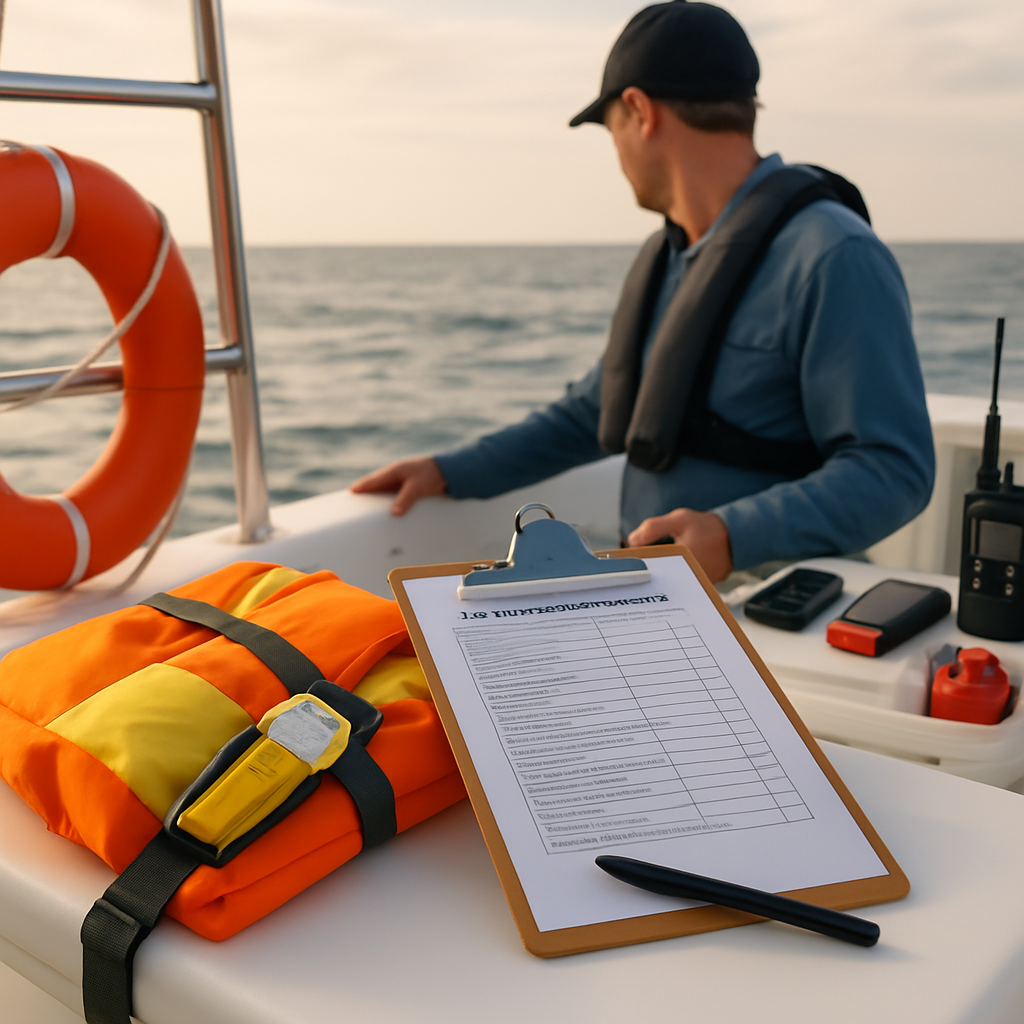
The master Safety Equipment Checklist below is designed for anglers who want one definitive list they can trim or expand as needed. Think of it as your “add or subtract” template: keep the essentials, then dial up the survival gear for longer or offshore trips.
Personal Safety
- USCG-approved life jackets (PFDs) in the correct sizes—worn or immediately accessible.
- Throwable flotation device (Type IV).
- Personal Locator Beacon (PLB) or EPIRB for offshore trips.
- Whistle, waterproof signaling mirror, and high-visibility clothing.
- Prescription medications, spare glasses, and motion-sickness remedies.
Communication & Navigation
- VHF marine radio (handheld or fixed) with fully charged spare batteries.
- Mobile phone in a waterproof case and a charged power bank.
- GPS/chartplotter with updated charts and a handheld GPS or reliable mapping app.
- Compass and paper charts as a non-electronic backup.
- Navigation lights for low-visibility and night operation.
Emergency & Survival
- Flares and visual distress signals—check expiration dates.
- Marine-rated fire extinguisher(s) and monthly inspection routine.
- Well-stocked first-aid kit for wounds, burns, and hypothermia.
- Emergency/thermal blankets and extra warm clothing.
- Bilge pump (automatic + manual backup) and a bailer or bucket.
- Anchor with appropriate rode and a reliable attachment point.
Boat Systems & Maintenance
- Extra fuel (stored safely), fuel treatment, and a fuel-water separator if needed.
- Spare battery or portable jump starter; check battery terminals for corrosion.
- Basic tool kit, spare impeller, belts, fuses, and engine oil.
- Spare prop nut/bolt, zip ties, duct tape, and emergency repair materials.
- Dock lines, fenders, and chafe protection for rafting or emergencies.
Fishing-Specific Safety
- Sheathed sharp knife and line cutters secured to deck or person.
- Pliers, dehookers, gloves for fish handling, and a fish-landing plan.
- Non-slip deck surfaces and clear grab points for moving around the boat.
- Bright deck lighting and headlamps for night fishing safety.
Documentation & Planning
- Float plan left with a reliable contact showing route, ETA, and emergency numbers.
- Boat registration, licenses, insurance, and relevant permits in a waterproof folder.
- Printed emergency contacts and local marina/hull numbers.
Freshwater vs Saltwater — How the Checklist Changes
The core of your Safety Equipment Checklist stays the same, but priorities shift depending on where Du fish. Here’s how to adapt.
Saltwater / Offshore Priorities
When Du’re farther from help, redundancy is everything. Add an EPIRB or PLB, more food and water, stronger anchoring systems, and corrosion-resistant spare parts. If Du’re heading beyond the horizon, assume electronics might fail and pack accordingly.
Freshwater / Inland Priorities
On calmer lakes or rivers, Du can often rely on faster rescue response times, but still respect unexpected hazards: submerged logs, sudden storms, and tricky currents. Focus on proper PFD use, a waterproof phone solution, and clear local float plans.
The Ultimate Safety Equipment Checklist for Weekend Anglers
Short on time? Here’s a compact, high-impact list for a day-trip or weekend angler. It’s bite-sized but effective—perfect for a quick pre-departure run-through.
- Wearable PFDs for everyone on board—make sure they fit.
- Handheld VHF radio with fresh batteries.
- Throwable flotation device within reach.
- First-aid kit and motion-sickness medication.
- Anchor with 30–50 ft of rode (adjust based on depth).
- Workable fire extinguisher and accessible charging for electronics.
- Fully charged phone in a waterproof case plus a power bank.
- Bilge pump or bailer and spare lines.
- Flares or a signal device and a whistle.
- Float plan filed with someone ashore.
Seasonal Safety Equipment Checklist
Seasons matter. Cold water changes survival times dramatically, while summer brings sun and dehydration risks. Update your Safety Equipment Checklist with seasonal considerations.
Spring
Bring rain gear and quick-drying layers. Check your bilge pump for spring runoff and update charts for shifting shoals after winter storms.
Summer
Hydration is king: carry sunscreen, SPF clothing, hats, and more fresh water than Du think Du’ll need. Consider shaded storage for electronics to prevent overheating.
Fall
Nights cool quickly. Add thermal blankets, insulated layers, and plan for earlier sunsets. Storm fronts can be stronger—watch the forecast closely.
Winter / Cold Water
Hypothermia risk skyrockets. Bring insulated flotation suits or dry suits, extra hand warmers, waterproof storage for critical electronics, and ensure batteries are maintained for cold starts.
Must-Have Safety Gear on Deck: Placement & Organization
It’s not enough to own safety gear—Du need to know where it is and how fast Du can get to it. Here’s how to stow things for maximum accessibility.
| Item | Where to Stow | Inspect / Test |
|---|---|---|
| PFDs | Under seats with labels or wall pockets | Monthly & before each trip |
| Throwable device | Mounted on rail or bow locker | Monthly |
| VHF radio | Console within reach of helm | Before each trip & periodic radio checks |
| Flares / signals | Dry, labeled locker | Annually—check expiry |
| Fire extinguisher | Mounted near helm and galley area | Monthly and after any use |
Pre-Trip Inspection & Maintenance Routine
A quick, consistent pre-departure routine prevents many headaches. Do these checks every time Du head out and log any issues for repair.
- Test bilge pumps and remove any debris from the bilge.
- Confirm fuel levels and check for leaks or water in the fuel.
- Test radios and navigation equipment; charge spare batteries.
- Inspect battery terminals and top up right-type fluids where applicable.
- Verify anchors, lines, and safety gear are securely stowed and ready.
- Check first-aid kit and replenish used or expired supplies.
- Discuss emergency roles with your crew and review the float plan.
Emergency Procedures & Basic Drills
Gear helps, but the crew’s response is what really counts. Drill these scenarios at least once a season—or more if your crew changes often.
Man Overboard
Shout “Man overboard!” point at the person, throw a flotation device, slow the boat and approach from downwind or downcurrent. Use your engine cutoff if someone falls. Practice a stop-and-retrieve so everyone knows their role.
Fire Onboard
Cut fuel and electrical power if safe, move people away from the flames, and use the fire extinguisher on the base of the fire. If it escalates quickly, prepare to abandon ship with life jackets already donned.
Taking On Water
Locate the source, use collision mats or temporary patches to slow leaks, run bilge pumps, and prepare flotation and abandonment plans if pumps can’t keep up. Always monitor weight distribution—too much weight aft or forward can worsen the situation.
Loss of Propulsion
Deploy anchor if in danger of drifting. Signal for help on VHF Channel 16 and use flares or visual signals if a tow is required.
MAYDAY Procedure
On VHF: press transmit, say “MAYDAY” three times, give vessel name, position, number of people onboard, nature of emergency, and the assistance required. Keep calm—clear and concise information gets help moving faster.
Compact Printable Checklist (Copy & Paste)
Keep this short list in your phone or laminated at the helm. It’s your go-to pre-departure cheat sheet.
- PFDs: worn or accessible for all
- VHF radio & mobile phone charged
- Throwable flotation device ready
- First-aid kit & emergency blanket present
- Fire extinguisher charged and mounted
- Anchor & rode secured
- Bilge pump / bailer accessible
- Spare fuel & battery/jump starter
- Flares & signaling devices (unexpired)
- Float plan filed with shore contact
FAQ — Frequently Asked Questions about the Safety Equipment Checklist
Q: What items are legally required on my fishing boat?
A: Legal requirements vary by country and region, but most jurisdictions require properly sized PFDs for everyone aboard, a throwable flotation device, navigation lights if operating at night, and registration documentation. Du should check local maritime authority guidance before heading out; treating legal minimums as the baseline and equipping additional safety gear is always smart.
Q: How often should I inspect and replace safety gear?
A: Inspect PFDs, lines, and life-saving equipment visually before every trip. Perform monthly functional checks on electronics, pumps, and fire extinguishers, and do a full annual review for EPIRB/PLB batteries, flare expirations, and harness condition. Replace anything showing wear or expired dates immediately—don’t wait.
Q: Which PFD should I choose for fishing?
A: For most anglers, a comfortable, USCG-approved Type III or activity-specific Type V PFD that allows free movement for casting and reeling is ideal. Offshore or in rough conditions, opt for higher-buoyancy vests or workvests. Du should always try a PFD on with the clothing Du’ll wear while fishing to ensure fit and comfort.
Q: Are flares necessary, or are electronic signals enough?
A: Flares remain widely accepted as reliable visual distress signals, especially offshore. Electronic options like PLBs and AIS-SARTs are excellent additions and sometimes superior in locating you quickly. Du should use a combination: flares for immediate visual warning and a PLB for automated rescue coordination in remote areas.
Q: EPIRB or PLB—what’s the difference and which do I need?
A: EPIRBs are typically larger, mounted devices registered to the vessel and intended for offshore commercial or recreational boats; they’re linked to satellites and maritime rescue centers. PLBs are portable, personal devices that Du can carry on your person. If Du fish offshore or travel far from shore, carry at least one PLB per person or an EPIRB for the boat.
Q: How should Du store and organize safety gear on deck?
A: Store commonly used safety gear in labeled, accessible spots: PFDs under seats or in wall pockets, throwable devices on rails, VHF at the helm, and flares in a dry locker. Keep a simple map at the helm showing where key items live. This reduces time lost in emergencies—Du should train with the crew so everyone knows locations blindfolded, practically speaking.
Q: What belongs in a fishing first-aid kit?
A: Include basics: adhesive bandages, sterile gauze, antiseptic wipes, trauma dressings, adhesive tape, pain relievers, antihistamines, burn gel, sting relief, seasickness meds, and blister care. Add tools like tweezers, scissors, and nitrile gloves. Customize for crew medical needs and re-stock after each outing.
Q: How should Du plan for night fishing or limited visibility?
A: Night trips require navigation lights in working order, powerful deck lights, headlamps for each angler, and a clear deck layout free of tripping hazards. Maintain a charged spare battery and consider radar or reliable GPS for navigation; Du should brief the crew on light rules and emergency procedures before casting off.
Q: How detailed should my float plan be?
A: Include destination, planned route, departure and expected return times, vessel description, number of people aboard, and emergency contact info. Give the plan to someone reliable on shore and update them if plans change. Float plans speed rescue and reduce confusion if Du don’t return on time.
Q: What’s the single best thing Du can do to improve safety?
A: Train and practice. Gear is essential, but execution under pressure is what saves lives. Run basic drills (man overboard, fire response, abandoning ship), practice radio calls, and ensure every crew member knows where safety gear is located and how to use it. Preparedness beats panic every time.
Final Advice from ISSU Wildfish
Your Safety Equipment Checklist is a living document—update it with new gear, lessons learned, and seasonal changes. Practice drills, brief your crew before every trip, and respect the weather. Safety gear only works when it’s maintained, accessible, and used. Keep it simple, keep it organized, and keep casting. When Du take these steps, Du’ll spend less time worrying and more time enjoying the things that got Du hooked on fishing in the first place.
Ready to build your own printable checklist? Copy the compact list above, tweak it for your boat and local regulations, and tuck a copy in a dry bag. Tight lines—and safe voyages from ISSU Wildfish.