Get Locked In: How Anchor and Ground Tackle Make Every Fishing Trip a Success
Attention: want to stop drifting off productive fish spots and spend more time hooking fish, not fighting the tide? Interest: understanding Anchor and Ground Tackle will do exactly that. Desire: imagine dropping in on a promising ledge, setting your gear, and watching the rod tips bend while your boat sits rock-steady. Action: read on, practice the techniques, and upgrade the right pieces of gear — you’ll anchor like a pro and keep more time for the fun part: fishing.
Anchor and Ground Tackle Essentials for Fishing Boats
Anchor and Ground Tackle is the backbone of safe, effective fishing. Whether you’re in a flats skiff, center console, or a heavier offshore boat, the fundamentals are the same: pick the right anchor, tailor your rode and fittings, and practice good deployment and retrieval. Done right, your anchor system keeps you on top of structure, reduces fuel use from station-keeping, and limits your risk of drifting into hazards or other boats.
Before you buy or swap anchors, it’s smart to think about the overall setup on your boat — not just the anchor and ground tackle. Check your Essential Boat Equipment to ensure deck cleats, rollers, and storage are ready for heavier rode; if you rely on powered systems, pairing the anchor with Reliable Trolling Motors gives you precise station-keeping while you set. Also consider dedicated Rod Storage Solutions so rods stay safe when you’re working the bow or hauling gear — combining these elements prevents tangles and saves time when every minute on the bite counts.
You might already know the frustration: you set anchor, feel confident, then a gust or a shifting tide has you sliding over the reef or out of the bite. That’s usually not a mystery — it’s a mismatch between anchor type, rode, and scope. This guide focuses on practical, easy-to-adopt fixes so that next time you drop, you won’t have to reposition every ten minutes.
Why this matters for anglers
Quick checklist: staying put over a ledge increases hookups. Holding position in current makes baits behave like natural prey. And finally, inshore and offshore safety relies heavily on a dependable anchor system. Anchoring poorly isn’t just an annoyance — it can be dangerous.
Choosing the Right Anchor for Your Fishing Vessel
Choosing the right anchor depends on three big things: the boat you run, the bottoms you fish, and how you anchor. Small boats, big boats, and everything in between need different solutions. Pick an anchor that fits your typical conditions, not just the one that looks coolest in the tackle catalog.
Match anchor to boat and style
Think about the weight and displacement of your boat. A light flats skiff won’t need the same anchor as a 28-foot center console loaded with gear. If you fish in areas with strong current or frequent storms, size up the anchor and the chain. Don’t under-gear — that’s the fastest path to a messy drift and missed strikes.
Consider where you fish
If you spend most time in soft mud or sand, a fluke-style anchor can offer excellent holding for less weight. If you fish mixed bottoms with weed or rock, a plow or a modern high-hold design is more reliable. Offshore anglers who face gusty winds and shifting seas should invest in stout, modern anchors and plenty of chain — peace of mind is worth the cost.
Quick sizing guide (general)
- 12–16 ft boats: ~5–10 lb anchors
- 16–22 ft boats: ~10–20 lb anchors
- 22–28 ft boats: ~20–35 lb anchors
- 28 ft and up: 35 lb and heavier, depending on displacement
Those are ballpark numbers. Check anchor manufacturers’ charts and upsize if you fish in heavy conditions.
Understanding Anchor Types: Fluke, Plow, and Danforth
Not all anchors are created equal. Let’s break down common types so you can choose the best one for your fishing needs.
Fluke (Danforth-style)
Fluke anchors are lightweight and efficient in sand and soft mud. They bite fast and give great holding per pound, which is why small-boat anglers love them. But they aren’t fans of weed or rocky bottoms. If you get into grass often, you’ll find flukes can be foiled by vegetation.
Plow (CQR, Delta)
Plow anchors are versatile and reset well when the wind or tide changes direction. They work across sand, mud, and gravel, and are a solid choice when you need reliability in mixed conditions. They’re heavier for the same holding as a fluke, but that weight buys you consistency.
Claw (Bruce)
Claw anchors set quickly and are pretty forgiving about how they land. They don’t deliver the absolute best holding-per-pound, but they’re great all-rounders for anglers who want a single anchor to handle different bottoms.
Modern high-holding designs (Rocna, Spade, Mantus)
These newer anchors are engineered to combine roll stability, fast setting, and strong bite in sand, mud and grass. They’re heavier-priced, but folks who fish far offshore or who anchor in tricky spots swear by them. If you want top-tier security and are willing to invest, these are worth serious consideration.
Grapnel and specialty anchors
Grapnels are compact and handy as backups, for rocky shorelines, or for hauling anchors up out of snags. Mushroom anchors are for permanent moorings and aren’t the go-to for day fishing. Keep a small grapnel as a throw-down backup — it’s saved many a day when the main anchor turned traitor.
Ground Tackle Components: Chain, Rope, Snubbers, and Accessories
Good ground tackle isn’t just the anchor; it’s the rode, fittings, snubbers, and the way everything is connected. Neglect one weaker link and the whole system can fail when you least expect it.
Chain vs rope — use both
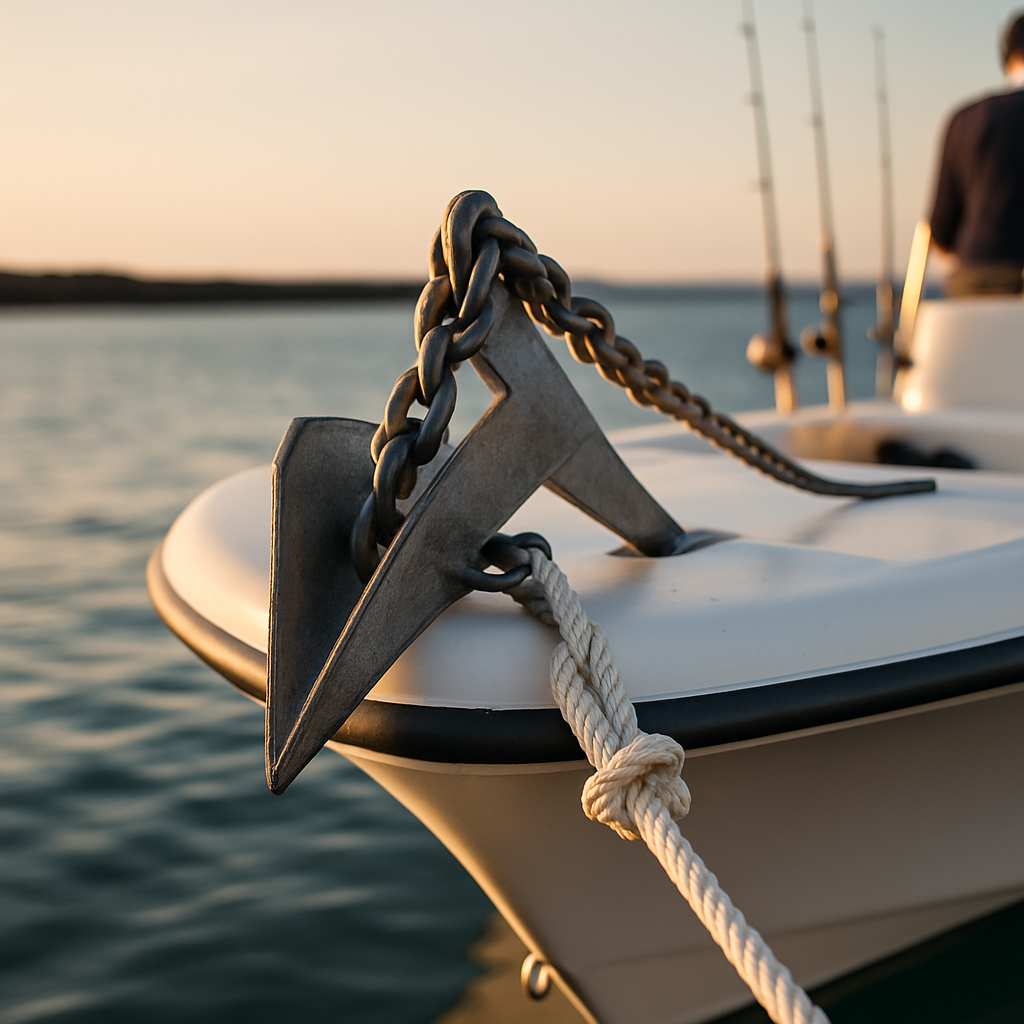
Chain gives weight, abrasion resistance, and helps the anchor lie flat so it can bite. Rope is easy to stow and stretchy (if you use nylon). A common setup is a short length of chain at the anchor, connected to nylon rode. That combination gives you the best of both worlds: handling ease and holding reliability.
Typical chain lengths
- Small boats: 10–30 ft of chain
- Medium boats: 30–50 ft
- Larger boats: more chain — up to and beyond 100 ft for heavy offshore use
Nylon rode — your shock absorber
Nylon is the go-to because it stretches under load, absorbing shock from waves and gusts. Double-braid nylon offers good strength and abrasion resistance. Don’t rely on polypropylene as your main rode — it floats and offers little shock absorption.
Snubbers, shackles, swivels and splices
Snubbers are cheap insurance. A properly sized snubber takes load off the windlass, reduces jerking, and keeps the anchor set. Shackles must be sized correctly; never skimp. Swivels can stop rode twist, but they’re another mechanical item to maintain. Proper splices and thimbles prolong rope life and reduce chafe.
| Component | Function | Tip |
|---|---|---|
| Anchor | Bites into bottom and holds boat | Match type to bottom |
| Chain | Adds weight, abrasion resistance | Short length at bow boosts holding power |
| Nylon rode | Absorbs shock, easy to handle | Use double-braid for strength |
| Snubber | Takes load off windlass | Attach to strong point on bow |
Anchoring Best Practices for Different Water Conditions
Anchoring technique is not one-size-fits-all. Let’s walk through realistic scenarios you’ll face out on the water and how to deal with them like someone who’s been there before.
General anchoring steps you can memorize
- Scout the spot — look for obvious hazards and give swing room.
- Approach slowly into wind or current.
- Lower anchor to bottom — don’t throw it. Pay out rode as you back down.
- Use steady reverse power to set the anchor once the rode is taut.
- Apply a snubber and inspect that the boat holds. Adjust scope if needed.
Scope — the crucial ratio
Scope is the ratio of rode to water depth (including your freeboard). Too little scope and the pull is upward, dragging the anchor. Typical recommendations:
- Calm, sheltered: 5:1
- Typical bay or lake: 7:1
- Heavy wind or current: 10:1 or more
Simple example: 12 ft total depth x 7 = ~84 ft rode to pay out. Yes, that sounds like a lot, but it dramatically improves holding.
Sand and mud
Fluke and modern designs shine here. Get a chunk of chain on the anchor and use 7:1 scope; you’ll be amazed at how well a properly set anchor holds. In soft mud, lighter anchors can bury deeply — just ensure your rode and fittings are up to the strain.
Grass and weed
Grass can be tricky. The anchor’s flukes may ride over the surface instead of digging in. Try a plow or modern high-holding anchor that can roll and find a gap. Using extra chain to keep the shank pulled horizontal helps the flukes to bite.
Rock and mixed bottoms
Anchoring on rock is the toughest. Anchors may not dig. Use a grapnel as a backup if you need to snag a crevice, or employ a second anchor set at a different angle. If you get stuck, deploy a trip line or use a kedge to dislodge — patience helps.
Current vs wind
Current is relentless and usually constant in one direction; wind can shift and gust. In strong current, more chain and a heavy anchor are your friends. In gusty conditions, keep plenty of scope and use a snubber so sudden gusts don’t shock-load the anchor system.
Maintenance and Safety: Inspecting and Stowing Anchors and Gear
Gear fails when you least expect it. A routine check and proper storage keep the system ready and extend the life of your components.
Inspection checklist
- Chain: look for corrosion, weld cracks, or link stretch. Measure and replace worn links.
- Shackles: check threads, pins, and any deformation. Replace if questionable.
- Rope: check for chafe, UV damage, and weakened strands. Re-splice or replace as needed.
- Anchor: inspect flukes, shank, and points for bends, cracks, or wear.
- Windlass: test under load, inspect gypsy and clutch, and follow the service schedule.
Stowing smart
Keep the anchor locker tidy. Coil rope so it feeds smoothly. Separate chain and rope if you can. Rinse saltwater from chain and anchor after trips to slow corrosion. Store small hardware in labeled bags to avoid fishing for shackles when you’re trying to set quickly.
Safety basics
- Never stand in the bight or handle snubbed rode under load.
- Wear gloves when handling chain and rode to avoid burns and cuts.
- Keep hands away from the windlass gypsy while it’s under tension.
- Make sure someone on board knows the plan for rapid retrieval and emergency cutaway.
Maintenance Quick Tips
- Rinse chain and anchor after every saltwater trip.
- Lubricate shackles lightly; avoid grease where it masks corrosion.
- Label rode increments so you can pay out repeatable scope quickly.
Troubleshooting & Common Mistakes
When something goes wrong, don’t panic. Here’s how to diagnose common problems and fix them without embarrassing yourself in the anchorage.
My anchor is dragging slowly
First, check scope and increase it. If that doesn’t help, inspect the rode for wrapped weed or debris and reset the anchor from a fresh angle. A short length of added chain often solves premature dragging in marginal bottoms.
Anchor won’t set
Try clearing any kinks, then reverse gently while paying out rode so the anchor lands and lays flat. If it still won’t set, retrieve, reposition slightly, and try again. Don’t be shy about moving a few boat-lengths to get a better spot — sometimes a small change makes a world of difference.
Snagged anchor
Mark it with a buoy if you can and try different pull angles. Use a trip line attached to the crown if you have one — it’s the classic trick for freeing stuck anchors. Worst case, get help from a diver or another boat to pull on a new angle.
FAQ — Frequently Asked Questions About Anchor and Ground Tackle
Below are common questions anglers search for online and the clear, practical answers you actually need. These are the ones customers and readers ask most — if you’re unsure about something, there’s a good chance it’s here.
How do I choose the right anchor size for my boat?
Pick an anchor based on your boat’s length, weight and typical conditions. Manufacturer charts are a good starting point, but size up if you fish in strong currents or frequent blowouts. For small skiffs (12–16 ft) a 5–10 lb anchor often works; mid-size center consoles (22–28 ft) usually need 20–35 lb. If you’re unsure, choose the heavier option — extra holding beat second-guessing on the water.
How much chain and rope should I carry?
Carry a mix: chain for the bite and rope for stretch. For small boats, 10–30 ft of chain plus nylon rode is common. Medium boats do well with 30–50 ft of chain; larger offshore boats often carry 50–150 ft or more. As for nylon rode, aim for at least 50–100 ft for typical day trips and increase scope for deep or rough conditions. The chain-to-rope transition gives you abrasion resistance up front and shock absorption aft.
What scope should I use when anchoring?
Scope is one of the most important factors. For calm, protected waters aim for 5:1. In typical bay or lake conditions use 7:1. For heavy weather or strong current push to 10:1 or more. Remember to include freeboard and any tide change in your calculations. More scope reduces upward pull and lets the anchor bite horizontally — that’s the key to holding.
Is chain really necessary?
Yes — even a short length of chain at the bow dramatically improves holding. Chain keeps the shank down so the flukes can dig and it resists abrasion on rocky bottoms. It also creates catenary to absorb shock. If you absolutely can’t have chain, consider alternatives like heavy stainless-steel or adding more snubber length, but chain remains the proven choice.
What anchor works best in grass or weed?
Flukes tend to ride over grass, so plow-style or modern roll-stable anchors (Rocna, Spade, Mantus) are better choices. They’re engineered to roll and bite through vegetation. If you’re stuck with a fluke, try adding chain, setting from multiple angles, or moving slightly to find cleaner patches — it’s often a matter of persistence.
How do I free a snagged anchor?
Mark the spot with a buoy if possible, then try varying pull angles. A trip line attached to the crown helps release anchors snagged in rocks. If that fails, send a diver or another boat to help change the pull direction. Carrying a grapnel or kedge can also help you fetch a stuck anchor by setting a new pull point.
Should I use one anchor or two?
One anchor is fine for most fishing situations, but two anchors help in heavy wind, strong cross-currents, or when you want to limit swing. Tandem or V-formation anchors reduce movement and keep your boat oriented. Two anchors add complexity and require practice, so try this technique in calm conditions before using it offshore.
How often should I inspect my ground tackle?
Inspect chain, shackles and rope at least annually, and more often if you fish saltwater frequently. Do quick checks before each trip — look for links that are worn, shackles with damaged threads, and rope chafe. Test the windlass under load and lubricate moving parts per manufacturer guidance. Regular checks catch small issues before they become costly failures.
Can I anchor overnight and what extra steps should I take?
Yes, you can anchor overnight, but take extra precautions: use more scope (10:1 or greater), add a second anchor if needed, set alarms or GPS anchor-watch, and make sure your bilge and battery are in good shape. Secure all gear and ensure a proper anchor light is visible. When fishing offshore or in busy waterways, consider a buddy boat or check-in routine with someone onshore.
How do I set up a snubber and why use one?
A snubber is a short length of nylon line attached between the chain and a bow cleat or strong point. It absorbs shock, takes load off the windlass, and helps keep the anchor set. To fit one, tie a proper eye splice in the nylon to fit over the chain, then secure the other end to a bow cleat with a soft, easily releasable hitch. The snubber should take most of the load once set.
What are the legal or environmental considerations when anchoring?
Respect local regulations: some areas prohibit anchoring in seagrass, protected reefs, or private moorings. Anchoring in sensitive habitats can damage ecosystems, so use designated anchorage zones and avoid dragging on coral or eelgrass. Check local charts and notices — being a considerate boater protects resources and keeps anchor options open for everyone.
How do I store and organize my anchor locker?
Keep chain and rope organized and separate if possible. Coil rope so it feeds smoothly and store small fittings in labeled bags. Rinse everything after saltwater trips and keep a spare anchor accessible. Using bags or dividers prevents tangles and makes deployment faster — that matters when you’re trying to get on fish quickly.
Final Checklist Before You Drop Anchor
- Assess wind, current, and swing room.
- Verify chain, rope, shackles, and snubber condition.
- Decide scope and mark it on the rode.
- Lower anchor properly and set with the engine — don’t just toss it over.
- Secure snubber and keep watch during the first minutes after setting.
Anchor and Ground Tackle might not be the flashiest topic, but it’s one of the most impactful things you can master as an angler. With the right gear, a little practice, and a routine inspection habit, you’ll spend less time chasing your boat and more time catching fish. So, next time you head out, check your rode, polish your knots, and drop in on the good spots with confidence — your cooler (and your crew) will thank you.